


Free AI Detection: How to Verify Whether Text Was Written by a Human or a Machine
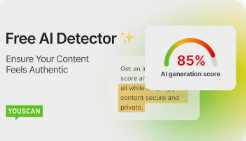
A few years ago, nobody asked whether an essay, a product description, or a blog post had been written by software. Today it is one of the most common questions in classrooms, newsrooms, and marketing teams. Fortunately, free AI detection has become accessible to everyone, letting you scan a passage in seconds without opening your wallet or creating a complicated account.
Why Free AI Detection Matters More Than Ever
Generative AI writes fluently, quickly, and at almost no cost. That is a gift for productivity, but it also blurs the line between authentic and automated writing. Teachers want to know whether a student actually wrestled with an argument. Editors need to protect their publication’s credibility. Businesses worry that search engines may devalue thin, mass-produced pages.
Detection is not about punishing AI use. It is about transparency. When you can measure how machine-like a text appears, you can decide whether it needs a rewrite, a citation, or simply a disclosure.
How AI Detectors Actually Work
Detectors do not “read” the way humans do. They analyze statistical patterns that language models tend to leave behind.
Perplexity and Predictability
Perplexity measures how surprising each word choice is. AI-generated text tends to pick the most probable next word, which makes it smooth and predictable. Human writers take odd detours, use unexpected idioms, and occasionally break their own rules.
Burstiness and Rhythm
Humans naturally mix long, winding sentences with short punchy ones. Burstiness describes this variation. Machine text is often more uniform, with sentences of similar length and structure marching along in a steady beat.
Semantic Fingerprints
More advanced systems compare a passage against patterns learned from huge datasets of both human and AI writing. The result is usually a probability score rather than a hard verdict, and that distinction is important.
What to Look for in a Free AI Detector
Not every free tool is equally useful. Before you paste your text anywhere, consider these points:
-
Clear scoring: A good tool shows a percentage or sentence-level highlighting, not just a vague yes or no.
-
Privacy: Your drafts should not be stored or resold. Check the privacy policy.
-
No hidden paywall: “Free” should mean you can actually finish a scan without being forced to upgrade halfway.
-
Speed: Results should arrive in seconds, not minutes.
A good example of a tool built around these principles is isgen.ai, which gives you a fast, browser-based scanner with clear results and no complicated setup.
Using Detection Results Wisely
A detection score is a signal, not a courtroom verdict. Even the best systems can produce false positives, especially with formal, technical, or heavily edited writing. Non-native English speakers are sometimes flagged unfairly because their careful, textbook-style phrasing can resemble machine output.
A Practical Workflow
-
Run your text through a detector and note any highlighted passages.
-
Read those sections aloud. Do they sound like you?
-
Add personal examples, specific details, and opinions that only you could provide.
-
Re-scan and compare.
Treat the process as editing, not evasion. The goal is writing that is genuinely yours, with a voice a reader can recognize.
Who Benefits Most from Free AI Detection
Students and educators can open honest conversations about acceptable tool use. Content marketers can confirm that outsourced articles meet originality standards before publishing. Publishers and editors gain an extra layer of quality control. Freelancers can show clients that their work is authentic, which builds trust and repeat business.
Language matters here too. Many writers work across borders, and someone searching for a KI Detektor kostenlos online is looking for exactly this kind of German-friendly, no-cost access. The best platforms accommodate that need without forcing users to switch tools.
The Future of AI Writing and Detection
This is an arms race of sorts. As language models improve, detectors must adapt, and neither side will ever be perfect. The healthiest outlook is to treat AI as a collaborator whose output deserves review, and detection as one tool among several, alongside fact-checking, editorial judgment, and plain common sense.
Conclusion
Free AI detection gives writers, teachers, and businesses a fast, low-risk way to understand what they are reading and publishing. Use it thoughtfully, interpret scores with caution, and always pair automated checks with human judgment. Do that consistently, and you can publish with confidence that your words are truly your own.

 English
 Arabic
 French
 Spanish
 Portuguese
 Turkish
 Dutch
Dutch
 Italiano
 Russian
 Romaian
 Portuguese (Brazil)
 Greek
Greek