

How to Enjoy a Geometry Jump: Learning the Rhythm, Not Just the Timing
Introduction
Geometry jump games are the kind of challenge that feels simple—move, jump, survive—until you actually try to do it with clean timing. If you’ve ever watched someone nail a difficult run in Geometry Dash and thought, “Okay… how is that even possible?”, you’re not alone. The secret is that the “impossible-looking” parts usually come from repeatable skills: reading patterns, staying calm through mistakes, and letting the music guide your reactions.
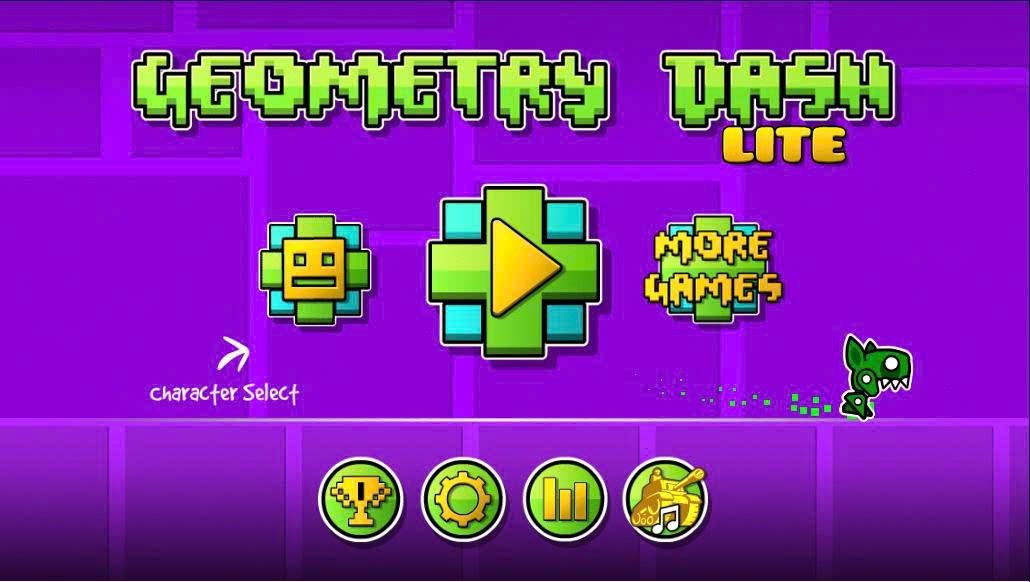
This article is about how to play (and experience) an interesting geometry jump, using Geometry Dash as the main example: not the fastest route, not the most brag-worthy strategies—just a friendly way to improve while enjoying the ride. If you want a place to start exploring, you can find more about Geometry Dash through the link, and then focus on what matters: practice that feels good.
Gameplay: How the “Geometry Jump” Really Works
At its core, a geometry jump is about responding to movement cues. Instead of thinking of the game as “press jump randomly,” try thinking of it as a dance with strict beats. Your character is either rising, falling, or sliding forward through obstacles placed in the level’s timeline.
Here’s what the experience often looks like in Geometry Dash:
-
You read the level like a pattern, not a surprise.
Early on, many obstacles feel random. But after a few attempts, you’ll notice repetition: gaps appear in consistent spacing, hazard blocks line up in predictable sequences, and safe platforms tend to come in clusters. -
You sync your actions to the music.
One of the most satisfying moments in geometry jump games is when your inputs stop feeling reactive and start feeling “on beat.” Even if you aren’t aiming for perfection, noticing the rhythm helps you anticipate what’s coming next. -
You learn that timing has “feel,” not just precision.
People sometimes chase exact milliseconds. That’s not the first step. The first step is learning the general window: when a jump should happen before the obstacle, not after it becomes impossible. -
You experience failure as information.
Getting hit is frustrating, but it also tells you something useful: was your jump too early, too late, or did you misunderstand a hidden gap? With each attempt, the game becomes less mysterious and more legible.
A great way to experience this progression is to choose one level—ideally not your toughest obsession—and run it repeatedly until you can predict several sections confidently. Your goal isn’t to “clear it today.” Your goal is to build a sense of control.
A simple “run loop” that feels natural
Try this loop for your next play session:
-
Make one attempt focusing on only one section (for example, the first third of the level).
-
If you die, don’t immediately restart—watch that section for a moment and identify what you did.
-
Restart and try the same section again, aiming for a smoother feel rather than a perfect outcome.
-
When you can survive that section consistently, move your attention to the next one.
This turns gameplay into manageable chunks, which makes the learning curve much less stressful.
Tips: Improve Faster Without Losing Your Fun
Geometry jump mastery often comes down to small habits. Here are practical tips that help you progress while keeping the experience enjoyable.
1. Start with “comfortable difficulty,” then step up
If a level is far beyond your current skill, your brain may spend the whole time reacting in panic instead of learning patterns. Choose a level you can reach a few times. Not necessarily “easy,” but reachable. You want attempts that teach you something rather than just showing you the same failure screen.
2. Practice with awareness, not only repetition
Repetition builds memory, but awareness builds understanding. During attempts, try to notice:
-
Are you jumping too early because you’re excited?
-
Are you jumping too late because you’re hesitating?
-
Does your death happen after a specific kind of obstacle (spikes, narrow platforms, tight timing jumps)?
Once you identify the pattern, you can fix the cause instead of guessing.
3. Use the “relaxed focus” mindset
It’s easy to tense up when obstacles get scary. But tension often makes your reaction timing worse. Aim for steady attention: not relaxed enough to drift, but calm enough to respond accurately. Think of it like holding a pen—firm, but not crushing.
4. Watch the level’s geometry while you’re dead
When you respawn, resist the urge to mash the start button with full speed. Instead, take a quick look at the segment that killed you. Ask yourself a simple question: What would I need to do differently if I wanted to survive that one moment? Then test that change immediately.
5. Learn “reading routes”
Players often develop mental routes: “After this platform, there’s a gap, then a jump, then a hold.” Even if you don’t consciously think those words, your mind starts constructing a path. The more you practice, the more your eyes recognize what’s coming, and your hands follow.
6. Improve consistency before speed
Clearing a level even once is exciting, but consistency is what actually improves your skill. If you can pass the first half of a level five times in a row, you’re building a foundation. If you only clear it one time out of ten, you’re still learning—but you’ll likely progress faster by making early sections reliable.
7. If you’re stuck, change what you focus on
Stagnation happens when you keep repeating the same attempt style. If you’ve been failing at the same point, try a different approach:
-
Slow down your mental rhythm (not in real time, just in attention).
-
Focus on the next input only, not the whole level.
-
Re-check whether you’re misreading an early movement cue that changes your timing later.
The goal is to break the “stuck loop” by changing the learning angle.
Conclusion
An interesting geometry jump isn’t just about beating obstacles—it’s about experiencing a rhythm you learn over time. With Geometry Dash as the example, the journey becomes clearer when you treat each run like a lesson: read patterns, sync to music, practice in sections, and use failure as feedback instead of a setback.
If you’re just starting, don’t chase perfection. Choose a level you can reach, play for understanding, and celebrate small milestones—like surviving a tricky segment or hitting a beat you used to miss. Over time, you’ll notice something surprising: the game stops feeling like a frantic test and starts feeling like a controlled, satisfying flow of geometry and timing.
And when you finally land a run you’ve been working toward, it won’t just be “winning.” It’ll be the moment your hands and eyes learned the same language.

 English
 Arabic
 French
 Spanish
 Portuguese
 Deutsch
 Turkish
 Italiano
 Russian
 Romaian
 Portuguese (Brazil)
 Greek
Greek